


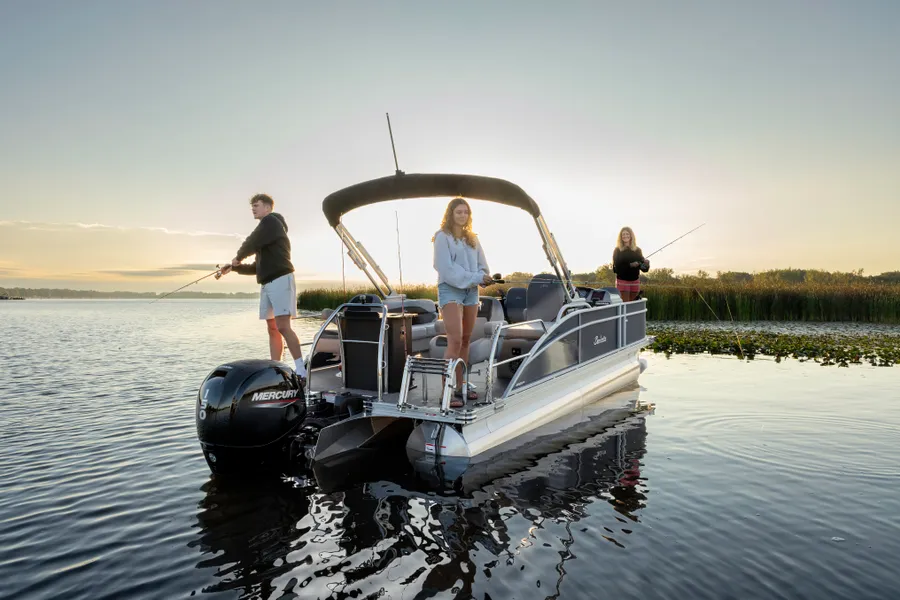
Pushing the throttle of your boat forward and watching the coastline break away is the ultimate reward for any South Florida mariner. While our dealer network covers dynamic waterways across Pompano Beach and Miami, running out of our premier showroom hub at Sundance Marine in Jensen Beach introduces a completely unique boating lifestyle. Here, captains regularly transition between the protected, glassy flats of the Indian River Lagoon and the rolling coastal chop of the St. Lucie Inlet. For navigating this beautiful, diverse saltwater environment with maximum crew comfort, the traditional single-hull day cruiser has met its match. Pontoons have evolved into true open-water platforms—and exclusively at our Jensen Beach location, Sundance Marine proudly offers elite Barletta Pontoon models engineered specifically to conquer coastal demands.
Taking a pontoon boat out onto the saltwater passes of Jensen Beach transforms your day into a luxury island-hopping adventure. However, managing a multi-hull aluminum platform in a marine environment requires a strict set of preventative maintenance habits and tactical handling adjustments.
1. Insist on a Purpose-Built Saltwater Package
Saltwater is a highly corrosive environment that will quickly degrade standard freshwater inland components. If you are taking a pontoon onto the ocean or tidal estuaries, verifying its structural metallurgy is your primary line of defense.
- Verify Sacrificial Protection: Coastal-calibrated models—like the specialized Barletta Coastal Editions featured at our Jensen Beach showroom—come factory-equipped with sacrificial zinc or aluminum anodes. These anodes naturally absorb destructive galvanic electrical currents, protecting your aluminum tubes and engine lower units from severe pitting.
- Shield Internal Substructures: Ensure the platform utilizes heavy-duty stainless steel fasteners rather than standard zinc-plated hardware. A solid aluminum under-deck skin sheet is also essential; it deflects heavy saltwater spray away from the wooden deck beams, eliminating moisture traps.
2. Flush and Wash Down Thoroughly After Every Run
The absolute most critical habit a saltwater pontoon captain can establish happens the exact second the trailer leaves the public boat ramp or the hull enters a dry storage slip.
- Evacuate the Cooling Loop: Salt crystals naturally solidify inside your engine cooling channels when the motor is turned off, leading to rapid block overheating. Hook up a fresh water source to your flush ports immediately, running your engine at idle for a minimum of ten continuous minutes to clear the lines completely.
- Neutralize the Deck Layout: Spray down every inch of the outer aluminum railskins, deck fencing, swim platform, and vinyl upholstery with fresh water and a specialized marine-grade soap. Pay close attention to the structural junctions where the tubes meet the deck brackets to wash away trapped brine.
3. Account for Shallow Transom Outboard Clearance
Because a multi-hull displacement deck floats flatly and uniformly across the water surface, it can give a captain a false sense of absolute shallow-water immunity.
- Monitor the True Skeg Depth: While the bow of a triple-toon draws remarkably little water, your outboard engine's lower unit, propeller, and tracking skeg sit significantly lower in the water column at the stern.
- Avoid Sandbar Groundings: When idling into the shallow flats near the Jensen Beach Causeway or pulling close to a tidal sandbar, trim your engine up manually. This lifts your delicate running gear away from hidden oyster beds and abrasive sand shelves, protecting your fiberglass strakes and lower units from severe impact damage.
4. Adjust Tactical Handling for Wind Vectors and Tidal Chops
Operating a multi-hull platform through an active pass like the St. Lucie Inlet requires recognizing how its unique physical layout interacts with the elements.
- Manage High-Profile Fencing: The expansive vertical fencing and bimini tops that create such an excellent floating living room act as natural sails. Shifting wind vectors will exert significant lateral pressure on the hull, demanding proactive throttle adjustments when backing into tight marina slips.
- Slice Through Displacement Wakes: When tracking through a heavy cross-cutting wake from a passing sportfish cruiser, avoid taking the wave dead-on at a 90-degree angle, which can cause the wide bow to stuff into the roller. Instead, angle the nose slightly to a 45-degree trajectory, allowing the sharp entry lines of the tubes to slice smoothly through the displacement swell.
Frequently Asked Questions
What is the legal speed restriction for operating a watercraft after dark in Florida waters? Unlike jurisdictions with blanket numeric nighttime speed caps, Florida maritime law mandates that all vessels maintain a "safe speed" at night based on prevailing visibility, weather, and traffic conditions. However, operators must strictly adhere to localized, posted "Slow Speed, Minimum Wake" restrictions, which legally require the hull to ride fully off plane and completely settled in the water column with a minimal wake profile.
Why is running the engine bilge blower mandatory before launching or starting an inboard vessel? Gasoline fuel vapors are heavier than atmospheric air and naturally accumulate in the lowest quadrants of a sealed engine bay or bilge compartment. Safety regulations dictate that power-operated exhaust blowers must be activated for a minimum of four continuous minutes prior to starting an inboard or sterndrive engine. This process evacuates any trapped combustible vapors, preventing a catastrophic static-spark explosion inside the hull machinery space.
Sourcing Authorized Marine Assets & Technical Upkeep
Safeguarding your vessel through variable seasonal conditions requires outfitting your platform with components and mechanical structures calibrated to exact manufacturer tolerances.
- Comprehensive New and Pre-Owned Showrooms: To evaluate rough-water hull geometries, test luxury pontoon layouts, or compare the tracking profiles of elite regional brands, explore our complete regional inventories of premium New Boats and strictly certified Used Boats.
- Advanced Transom Repower Operations: If your existing power plant exhibits low-end throttle lag or lacks modern digital networks near the courtesy docks, outfitting your transom through our specialized Repower Mercury or Repower Yamaha hubs installs advanced control systems for absolute handling precision.
- Certified Multi-Point Systems Maintenance: From testing low-voltage battery capacities under load to replacing raw-water pump impellers or diagnosing hydraulic steering binding, trust our factory-trained technicians at the Sundance Marine Service Center department for detailed cosmetic detailing and preventative mechanical checks. For do-it-yourself maintenance, our Parts Center supplies factory-direct filters, zinc anodes, and marine accessories.
Fleet Allocation and Financial Coordination
What structural consumer credit frameworks exist for premium vessel procurement? Our internal Financing office constructs customized consumer portfolios, allowing buyers to seamlessly bundle their high-performance hull selection, reliable outboards, technical navigation electronics, and comprehensive Marine Insurance protections into a single structured loan.
Can I leverage my current boat's equity to transition to a modern rough-water platform? Yes. We facilitate transparent, market-accurate asset evaluations to eliminate personal listing delays. To liquidate your old hull and apply its equity directly toward an upgrade, submit your vessel's technical specifications to our Sell / Trade department.
How do I track upcoming dealer events or connect with Sundance Marine? To learn about our 46-year legacy serving Florida mariners since 1980, visit our About Us page. You can monitor our active schedule of safe-boating seminars, captain safety workshops, and regional boat shows on our Events page, track continuous technical maintenance guides on our Blog section, see verified customer feedback on our Reviews directory, or connect directly with our specialized team members via our Staff index. Experience these performance traits firsthand and evaluate various configurations across real-world water conditions by connecting directly through our main Contact Us portal.